Table of Contents
Introduction:
Artificial Intelligence (AI) is no longer a concept from science fiction motion pictures or a point examined, as it were, by computer researchers. Nowadays, AI is woven into the texture of our ordinary presence, forming how we work, communicate, shop, travel, and indeed engage ourselves. From the smartphones in our hands to the virtual collaborators in our homes, from online shopping proposals to progressive healthcare diagnostics, AI has become a noiseless companion ai in daily life.
This article investigates how AI is integrated into distinctive angles of everyday living, its preferences, challenges, and its potential to change the future.
What is Manufactured Intelligence?
Artificial Insights alludes to the capability of machines and computer frameworks to perform tasks that customarily required human insight. These incorporate problem-solving, decision-making, normal language understanding, learning from experience, and, indeed, recognition. AI is fueled by calculations, machine learning, profound learning, and huge information, empowering frameworks to adjust and progress over time without explicit human programming.
For standard individuals, AI may appear undetectable, but it is displayed in nearly everything—from Google searches to GPS routes, from social media bolsters to personalized Netflix recommendations.
The Part of AI in Day-to-Day Life
AI in Communication:
Communication has changed drastically with the coming of AI. Voice assistants such as Siri, Alexa, and Google Partner permit clients to send messages, make calls, or plan updates essentially through voice commands. Chatbots on websites react to client inquiries 24/7, making interactions quicker and more helpful. Interpretation devices like Google Decipher utilize AI to break down dialect obstructions, empowering worldwide communication.
AI is moreover behind mail spam channels, prescient content, and linguistic use adjustment devices like Grammarly, making communication smoother and more professional.
AI in Transportation:
Transportation is one of the most obvious divisions changed by AI. Route apps like Google Maps and Waze utilize AI to analyze activity information in real time, recommending the quickest courses and forecasting entry times. AI moreover plays a significant part in ride-hailing apps such as Uber, coordinating drivers with travelers efficiently.
Perhaps the most progressive effect of AI in transportation is the independent vehicles. Companies like Tesla and Waymo are leading the way in making self-driving cars, which utilize AI to plan data from cameras, sensors, and radars to make driving choices. These advancements point to decreasing human mistakes and make streets safer.
AI in Education:
AI has gotten to be a quiet mentor, making a difference so that students learn way better and quicker. Stages like Duolingo and Khan Academy utilize AI calculations to personalize lessons based on the learner’s pace and understanding. AI-powered evaluation frameworks can assess assignments rapidly, sparing instructors valuable time.
AI-driven chatbots in colleges help students with regulatory inquiries, whereas virtual classrooms with AI integration guarantee further learning remains intuitive and versatile. Prescient analytics indeed offer assistance to educate and recognize students who may require additional support.
AI in Healthcare:
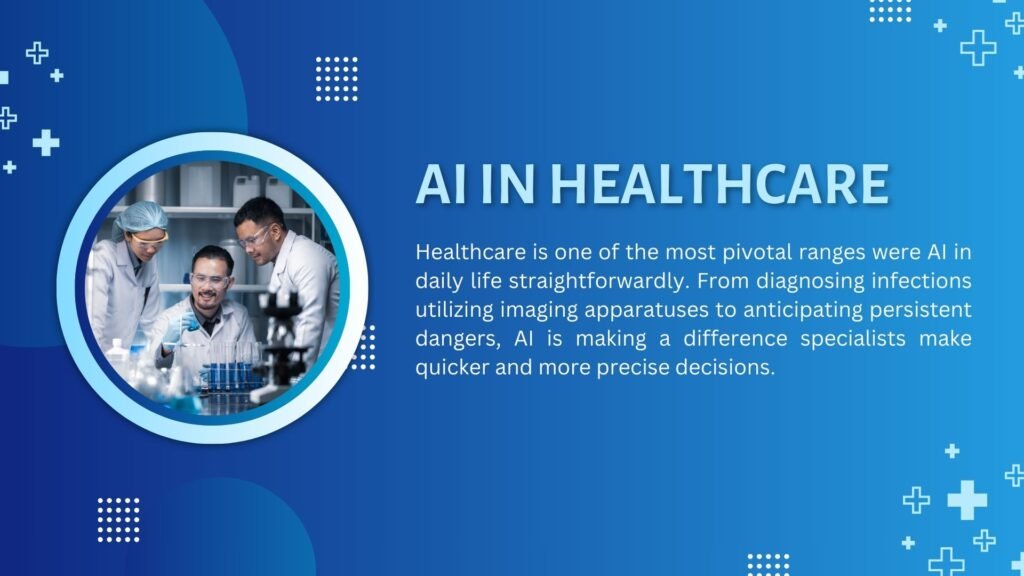
Healthcare is one of the most pivotal ranges were AI is used in daily life. From diagnosing infections utilizing imaging apparatuses to anticipating persistent dangers, AI is making a difference for specialists to make quicker and more precise decisions.
Wearable gadgets like Fitbit and Apple Watch utilize AI to screen heart rate, rest cycles, and physical activity, sending cautions in case of inconsistencies. AI moreover powers robot-assisted surgeries, permitting for negligibly invasive methods with higher precision.
During the COVID-19 pandemic, AI tools played a key part in following the virus’s spread, creating antibodies, and overseeing persistent care.
AI in Shopping and E-Commerce:
Online shopping is nearly incredible without AI. Stages like Amazon and Alibaba depend intensely on proposal frameworks that analyze client behavior to recommend items. AI too powers chatbots in e-commerce, making a difference clients to discover what they need.
Visual look-up apparatuses permit clients to transfer a picture and discover comparable items immediately. Extortion location frameworks, fueled by AI, protect shoppers from tricks and suspicious exchanges. Personalized bargains, rebates, and updates are also based on AI-driven examination of shopping patterns.
AI in Entertainment:
Entertainment has been revolutionized by AI. Stages like Netflix, Spotify, and YouTube utilize recommendation algorithms to recommend movies, tunes, or recordings custom ficustom-fitteduser’s taste. Video diversions are another space where AI improves player encounters through more astute, more versatile opponents.
In inventive businesses, AI in daily life instruments can presently compose music, produce works of art, or indeed compose screenplays, starting talks about whether machines can genuinely supplant human creativity.
AI in Social Media:
Social media platforms like Facebook, Instagram, and TikTok depend intensely on AI to provide personalized boosts. AI analyzes what substance clients engage with most and prioritizes comparable posts. Facial acknowledgment highlights offer assistance to tag companions in photographs automatically.
AI moreover plays a basic part in recognizing fake accounts, identifying improper content, and combating deception, in spite of the fact that challenges remain.
AI in Keeping Money and Finance:
AI guarantees secure and consistent monetary exchanges. Banks utilize AI-powered extortion detection frameworks to distinguish abnormal movement in client accounts. Virtual colleagues offer assistance to clients with questions, whereas chatbots make managing account administrations more accessible.
Robo-advisors, fueled by AI, analyze financial markets and give venture exhortation custom fitted to person chance inclinations. AI also makes a difference in mechanizing credit scoring and advanced endorsement processes.
AI in Keen Homes:
The concept of a keen domestic is fueled by AI. Gadgets like savvy indoor regulators (Settle), AI-powered lighting frameworks, and security cameras learn from client behavior and adjust accordingly.
AI in Work and Productivity:
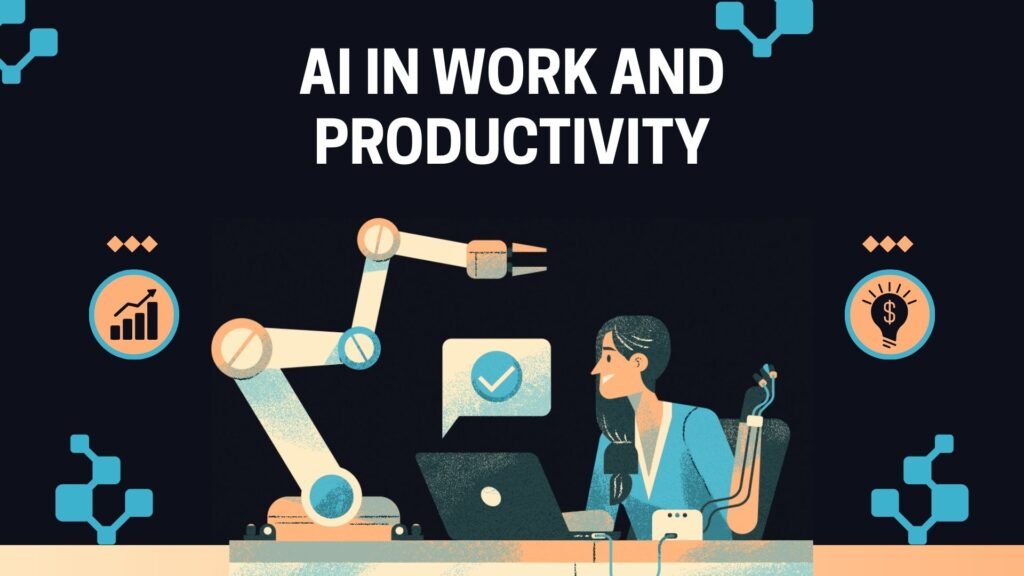
Workplaces have been changed by AI in daily life instruments. Microsoft Copilot, Google Workspace AI, and ChatGPT-like collaborators offer assistance to specialists to draft emails, analyze reports, and automate tedious assignments. AI also powers venture administration tools, making strides in effectiveness and collaboration.
Recruitment has gotten to be more streamlined, with AI analyzing resumes and coordinating candidates to work depictions. AI, moreover,r underpins further work by controlling real-time translation and interpretation in video meetings.
AI in Individual Safety:
AI is progressively utilized in security and defense. Observation cameras utilize AI for facial recognition and inconsistency discovery. Cybersecurity firms utilize AI to identify and neutralize online dangers. Smartphones presently have AI in daily life highlights like face open and unique finger impression checking, guaranteeing client information is protected.
Benefits of AI in Day-to-Day Life
Convenience – Robotizes monotonous errands, sparing time.
Personalization – Conveys custom-made substance and services.
Efficiency – Moves forward efficiency in work environments and homes.
Safety – Upgrades restorative diagnostics, transportation, and cybersecurity.
Accessibility – Makes a difference for individuals with disabilities through voice-to-text, route, and assistive technologies.
Challenges of AI in Day-to-Day Life
Privacy Concerns – AI regularly requires access to individual data.
Job Relocation – Mechanization can decrease the demand for certain roles.
Bias and Reasonableness – AI frameworks may reflect societal biases.
Overdependence – Depending too much on AI may decrease basic thinking.
Ethical Issues – Questions regarding AI supplanting human imagination and decision-making.
The Future of AI in Everyday Life:
The future guarantees indeed more profound integration of AI in ordinary exercises. Self-driving cars seem to be standard, shrewd cities may depend on AI for vitality administration and activity control, and healthcare will see more AI-powered diagnostics and treatments.
AI companions and enthusiastic support bots may end up common, obscuring the line between human and machine interaction. Be that as it may, moral directions and capable development will play a key part in forming this future.
Conclusion:
AI has discreetly but significantly ended up a portion of everyday life, affecting how we live, work, and interact with the world. Its applications span businesses, bringing unmatched comfort, personalization, and effectiveness. Whereas challenges like security, work uprooting, and moral concerns stay, AI’s potential to move forward human life is undeniable.
As AI proceeds to advance, it is up to society to utilize it capably, guaranteeing that innovation serves humankind rather than supplanting it. The travel of AI in day-to-day life is just starting, and its future promises to be both transformative and energizing.
Frequently Asked Questions
How is AI utilized in regular life?
AI is utilized in smartphones, online shopping, healthcare, transportation, social media, managing money, and smart domestic devices.
Is AI secure to use?
Generally, AI is secure, but dangers incorporate protection infringement, abuse, and reliance on one-sided calculations. Dependable utilization and direction are key.
Will AI take over human jobs?
AI will computerize a few occupations, but to create modern openings in innovation, data analysis, and AI framework management.
What are the illustrations of AI we utilize daily?
Examples incorporate Siri, Google Maps, Netflix suggestions, Amazon shopping recommendations, and managing an account extortion alert.
How does AI offer assistance in healthcare?
AI helps in diagnosing infections, observing wellbeing through wearables, foreseeing dangers, and supporting specialists in treatment decisions.