Table of Contents
Introduction:
How does AI voice cloning work? Actually, artificial intelligence (AI) has changed the way we communicate, work, and indeed express ourselves. But one of its most unsettling advancements is AI voice cloning — the capacity to duplicate a person’s voice so precisely that it’s nearly incomprehensible to tell the distinction between genuine and fake.
In this article, we’ll investigate how AI voice cloning works, the innovation behind it, its potential applications, and most imperatively — why it can be both progressive and profoundly concerning.
What Does AI Voice Cloning Work?
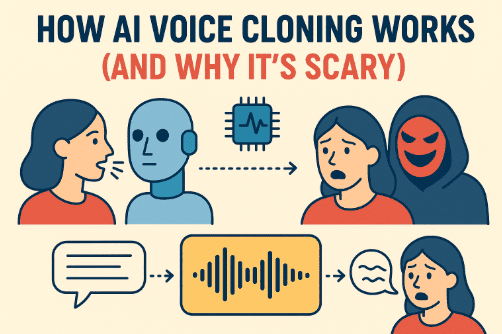
AI voice cloning works is the prepare of utilizing counterfeit insights to make a computerized duplicate of someone’s voice. With a fair few seconds or minutes of recorded discourse, AI can analyze tone, pitch, context, and discourse designs to produce a near-perfect imitation.
This innovation falls beneath the field of discourse union, a subset of profound learning and machine learning. Once prepared, the AI can make the cloned voice say essentially anything — from perusing a script to having full-blown conversations.
The Center Innovation Behind AI Voice Cloning Works:
Let’s break down how it all works behind the scenes. Voice cloning depends on a combination of profound learning, neural systems, and characteristic dialect handling (NLP).
Information Collection:
AI needs to prepare information, which implies recordings of the person’s voice. The more information it gets, the more characteristic and exact the cloned voice gets to be. Ordinarily, indeed, a few minutes of sound are sufficient for present-day calculations to work their magic.
Highlight Extraction:
The AI analyzes the voice tests to distinguish interesting characteristics — like pitch, speed, and emphasis. This organization is like instructing the AI to “understand” the person’s vocal identity.
Demonstrate Training:
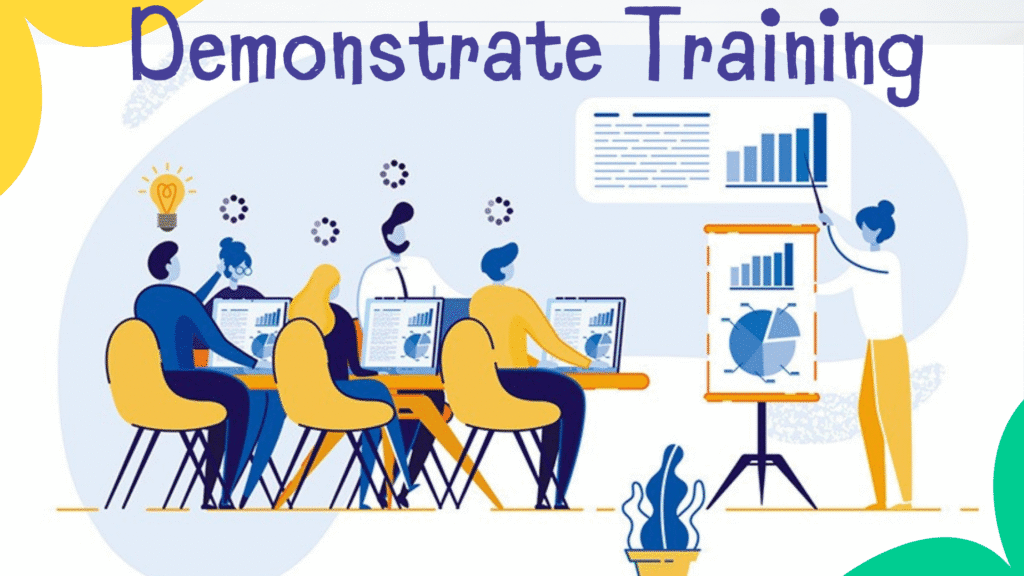
Using profound neural systems (DNNs) or transformer-based models, the AI learns designs in the voice and maps them to phonemes (the smallest units of sound in speech).
Essentially, the framework learns how the individual would sound in any circumstance or with any sentence.
Voice Synthesis:
Finally, the prepared show employs text-to-speech (TTS) strategies to produce discourse in the cloned voice. When you sort or talk about something, the AI can react utilizing that particular voice.
Popular Devices Utilized for AI Voice Cloning Works
Several stages have made AI voice cloning work open to the public:
- ElevenLabs – Known for ultra-realistic voice cloning.
- Descript (Overdub) – Permits makers to clone their own voices for podcast editing.
- Resemble.ai – Offers enthusiastic tone control and voice conversion.
- Microsoft’s VALL-E – Can clone a voice with just three seconds of audio.
While these devices serve authentic imaginative purposes, they also raise moral concerns when misused.
Legitimate Employments of AI Voice Cloning:
Before jumping into the dim side, it’s worth specifying that not all voice cloning is terrible. In truth, it has a few extraordinary benefits:
Openness for the Disabled:
AI voice cloning makes a difference for individuals with discourse impediments or ALS to recapture their voice. By recording tests some time recently,y their condition compounds, they can proceed “speaking” with their common voice utilizing AI.
Amusement and Media:
Voice cloning is utilized in film naming, gaming, and indeed to reproduce the voices of deceased on-screen characters in movies.
Client Benefit and Virtual Assistants:
Companies can utilize cloned voices to make natural-sounding virtual operators in place of mechanical ones.
Dialect Learning:
Students can listen to the substance in commonplace voices, making learning more personalized and engaging.
The Dim Side: Why AI Voice Cloning Is Scary
While AI voice cloning offers energizing possibilities, it also opens the door to genuine moral and security risks.
Deepfake Scams:
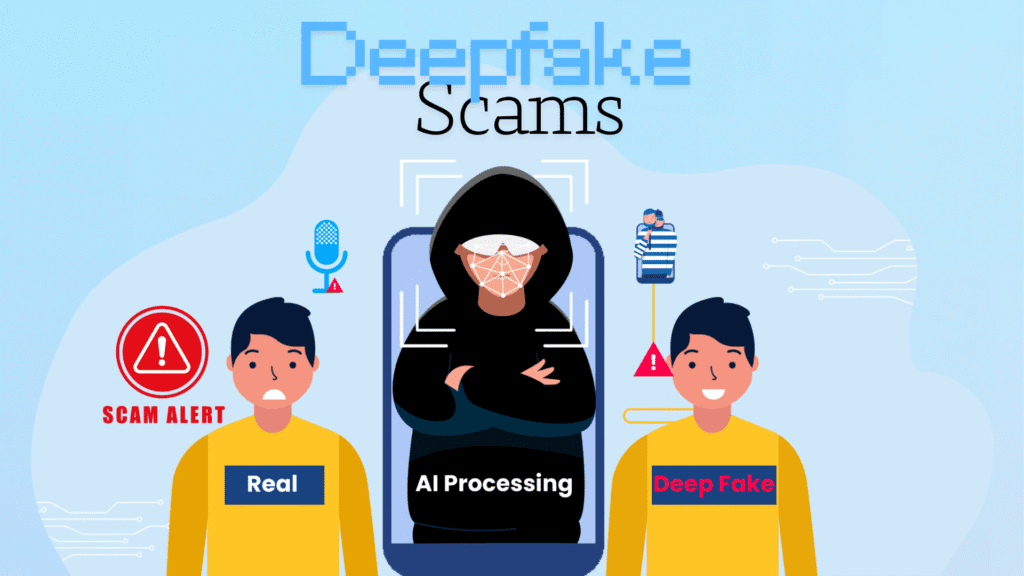
Cybercriminals have as of now utilized cloned voices to trap individuals into sending cash or secret information. Envision getting a call that sounds precisely like your boss, inquiring about a critical transfer.
Personality Theft:
Voice is getting to be a common security highlight for managing accounts and authentication frameworks. A cloned voice can bypass voice confirmation, making individual information vulnerable.
Political Manipulation:
Fake talks or interviews made with cloned voices seem to be utilized to spread deception, harm reputations, or impact elections.
Misfortune of Trust:
As voice cloning gets to be more common, it may become troublesome to believe what we listen to — whether it’s a news clip, a voicemail, or a live stream.
Real-Life Episodes Including AI Voice Cloning:
There have as of now been disturbing cases around the world. In 2019, a UK company was deceived into exchanging $243,000 after a representative got a call from what sounded like his CEO’s voice. It was afterward affirmed to be a voice deepfake.
More as of late, scammers have utilized AI-generated voices in seizing scams, calling guardians and imagining to be their children in trouble. These cases demonstrate how perilously persuasive this innovation can be.
The Morals of Voice Cloning:
The moral talk surrounding AI voice cloning is complex. On one hand, it’s a groundbreaking development; on the other, it debilitates security and authenticity.
Some contend that assent ought to be required — AI ought to, as it were, clone voices if the individual expressly permits it. Others accept governments must control it under AI straightforwardness laws to avoid misuse.
Can You Distinguish a Cloned Voice?
Detecting cloned voices isn’t simple. Be that as it may, analysts are working on AI voice discovery instruments that analyze subtle contrasts in sound waves, sound, and advanced fingerprints.
Still, as innovation progresses, cloned voices are getting harder to recognize. Indeed, prepared experts in some cases battle to tell the difference.
How to Safeguard Yourself from Voice Cloning Scams
Here are some commonsense steps you can take:
- Use voice confirmation as it were as portion of multi-factor authentication.
- Confirm through another channel (content or video call), or recently acting on a voice message.
- Avoid sharing individual voice recordings online.
- Educate family members and representatives about voice scams.
- Be cautious with obscure callers — indeed, if they sound familiar.
The Future of AI Voice Cloning Works:
The future holds both guarantees and dangers. AI voice cloning will likely become more practical, more available, and more integrated in day-to-day life — from virtual associates to entertainment.
However, as with all innovations, dependable utilization and moral control are key. Without them, we hazard losing belief in one of the most human components we have — our voice.
Conclusion:
AI Voice Cloning Works is an interesting mix of development and threat. It has the control to reestablish voices, engage, and interface with individuals, but also to betray, control, and exploit.
As the line between human and counterfeit voices becomes obscured, the obligation lies with engineers, governments, and clients alike to guarantee this innovation is utilized for good, not harm.
Frequently Asked Questions
How does AI clone a person’s voice?
AI employs profound learning to analyze voice tests and at that point duplicates the tone, pitch, and fashion to create discourse that sounds like the person.
Can AI clone a voice with a fair few seconds of audio?
Yes, progressed frameworks like Microsoft’s VALL-E can imitate a voice utilizing as little as three seconds of audio.
Is AI voice cloning legal?
It depends on the nation. By and large, cloning someone’s voice without assent for misdirection or benefit is illegal.
Can I clone my claim voice for individual use?
Absolutely! Numerous stages permit you to make a custom voice for recordings, podcasts, or public purposes — totally legally.