Table of Contents
Introduction:
In today’s quickly advancing computerized world, the demand for quicker information processing, cloud & edge computing, consistent network, and real-time knowledge is higher than ever. Businesses, governments, and people depend on innovation not only for comfort but also for basic decision-making. Whereas cloud computing has thus far established itself as a prevailing constraint in data storage and processing, edge computing brings a modern measurement by empowering information to be handled closer to the source. Together, they are reclassifying how organizations approach adaptability, effectiveness, and security in the advanced age.
What is Cloud Computing?
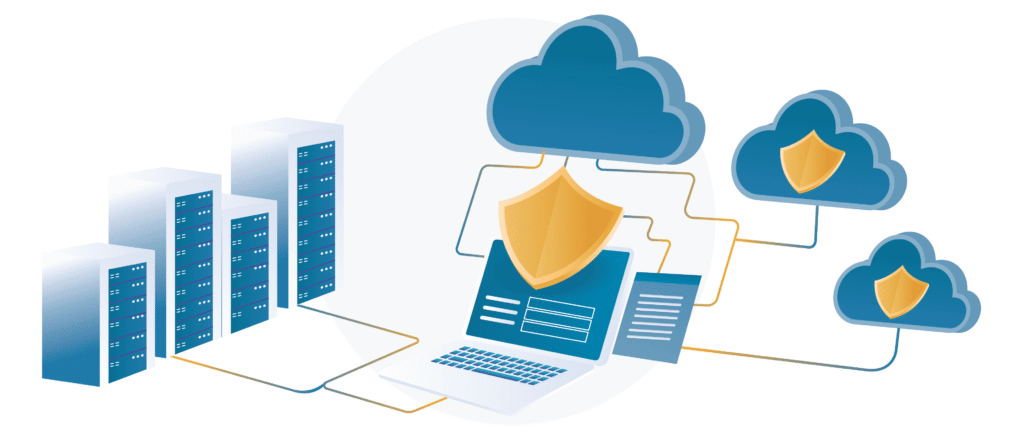
Cloud & Edge Computing is the conveyance of computing services over the web, permitting businesses and people to access capacity, applications, and control without owning costly equipment. Instead of keeping up nearby servers or individual gadgets with high handling capabilities, clients can use capable cloud servers found worldwide.
The cloud show is based on three fundamental benefit types:
- IaaS (Foundation as a Benefit): Gives virtualized computing assets like capacity and servers.
- SaaS (Program as a Benefit): Conveys computer program applications over the web, open on demand, such as Google Workspace, Salesforce, or Microsoft 365.
Cloud computing is well known since it is cost-efficient, versatile, and open universally. It kills the requirement for forthright speculation in the IT framework, while guaranteeing businesses can develop easily as demand increases.
What is Edge Computing?
Instead of sending crude information to a far-off cloud information center, cloud & edge computing permits nearby preparing. This diminishes idleness, spares transmission capacity, and guarantees speedier decision-making. For example, in self-driving cars, edge computing permits the vehicle to analyze real-time activity conditions without waiting for a cloud server’s response.
Key benefits of edge computing include:
- Reduced inactivity: Quicker information preparation due to proximity.
- Improved transmission capacity proficiency: Less information needs to travel long distances.
- Enhanced security: Delicate information can stay inside nearby networks.
(Cloud vs. Edge Computing) Key Contrasts:
They work differently:
| Aspect | Cloud Computing | Edge Computing |
| Location | Centralized information centers over the globe | Near or at the information source (IoT gadgets, sensors) |
| Latency | Higher due to distance between user and cloud server | Extremely low, as processing is local |
| Scalability | Highly scalable with global infrastructure | Limited scalability, device specific |
| Security | Vulnerable to external breaches, but highly regulated | Enhanced by keeping data local, but harder to manage |
| Use Cases | Big data analytics, SaaS application storage | Autonomous vehicles,AR/VR, industrial loT |
Latency Higher due to the delay between the client and the cloud server. Extremely moo, as handling is local
Scalability: Highly versatile with worldwide infrastructure. Limited versatility, device-specific
Security is vulnerable to outside breaches, but exceedingly regulated. Enhanced by keeping information nearby, but harder to manage
Use Cases: Big information analytics, SaaS applications, storage, Autonomous vehicles, AR/VR, mechanical IoT.
How Cloud and Edge Computing Work Together?
Businesses frequently send a cross-breed show that leverages both. For example, IoT sensors may collect information and handle it at the edge for prompt reaction, but also send summarized bits of knowledge to the cloud for long-term investigation and storage.
This cooperative energy ensures:
- Faster decision-making: Edge handles moment needs.
- Cost effectiveness: Cloud oversees bulk storage.
- Reliability: Repetition over frameworks diminishes risks.
A real-world illustration is keen cities. Activity lights may depend on edge computing to alter signals in real-time, whereas the cloud stores activity designs for future urban planning.
Benefits of Cloud & Edge Computing for Businesses:
- Scalability & Adaptability – Businesses can scale up right away through a cloud framework, whereas edge gadgets optimize nearby operations.
- Cost Reserve funds – By handling information locally, organizations spare transfer speed costs, whereas cloud diminishes capital use on infrastructure.
- Real-Time Analytics – Edge computing makes split-second choices conceivable, particularly in businesses like healthcare, car, and retail.
- Improved Security – Combining cloud security conventions with edge security upgrades for information protection.
Use Cases of Cloud & Edge Computing:
- Healthcare: Inaccessible, quiet observing gadgets handle information locally for crises but store records in the cloud.
- Retail: Keen racks identify stock in real-time utilizing edge sensors, whereas cloud frameworks analyze buying patterns.
- Automotive: Independent vehicles depend on edge computing for moment response and cloud services for over-the-air updates.
- Manufacturing: Prescient upkeep depends on IoT edge gadgets, with bits of knowledge encouraged into cloud-based AI models.
Challenges in Receiving Cloud & Edge Computing:
While both offer enormous benefits, businesses must moreover address challenges:
- Integration Complexity: Overseeing a crossover cloud-edge framework requires advanced IT expertise.
- Data Security Concerns: In spite of the fact that edge decreases presentation, different endpoints can be difficult to secure.
- Cost of Execution: Edge gadgets and cloud services may be costly for small businesses initially.
- Standardization Issues: Need of all inclusive measures complicates cross-platform interoperability.
Future of Cloud & Edge Computing:
The future will be driven by a combination of both innovations, particularly with the rise of AI, 5G, and IoT. By 2030, specialists foresee trillions of associated gadgets that will depend intensely on edge computing, whereas cloud platforms will proceed to oversee information capacity and analytics at scale.
We will likely see:
- Decentralized Cloud Models: Cloud suppliers are making smaller-scale information centers closer to users.
- Stronger Security Systems: Cross-breed models with progressed encryption and compliance standards.
Businesses that grasp this merging early will remain ahead in the advanced race.
Conclusion:
Cloud and edge computing are not competitors but vital accomplices in forming the future of innovation. While cloud computing offers flexibility, sensibility, and around the world reach, edge computing passes on speed, capability, and real-time responsiveness. Together, they lock in businesses, governments, and individuals to handle data in more brilliant, speedier, and more secure ways. The future of computerized framework lies in striking the idealize adjust between these two powerhouses.
Frequently Asked Questions
Is edge computing supplanting cloud computing?
No, edge computing complements cloud computing by taking care of real-time processing locally, whereas cloud oversees capacity and analytics.
What businesses advantage most from edge computing?
Industries like healthcare, car, fabricating, and broadcast communications pick up the most due to their dependence on real-time data.
How does edge computing move forward in security?
By keeping delicate information near its source, edge computing diminishes the dangers of introduction during transmission to centralized servers.
Can little businesses utilize edge computing?
Yes, but selection may require speculation in IoT gadgets and a specialized IT backend. Numerous cloud suppliers presently offer cost-effective edge arrangements for SMEs.