Table of Contents
Introduction:
In an era characterised by advanced change, where information streams as openly as discuss and each press takes on an advanced impression, two concepts have risen to the bleeding edge of worldwide attention: cybersecurity and data privacy. The rising tide of cyber dangers, information breaches, and security infringements has made it essential to adopt and implement strong cybersecurity and information protection practices.
What Is Cybersecurity?
Cybersecurity refers to the forms, innovations, and techniques planned to protect computer systems, gadgets, and information from cyberattacks. It envelops everything from antivirus computer programs and firewalls to interruption discovery frameworks and cybersecurity awareness training. It incorporates ensuring touchy data from programmers, defending basic infrastructure like control networks, and securing individual gadgets like smartphones and laptops.
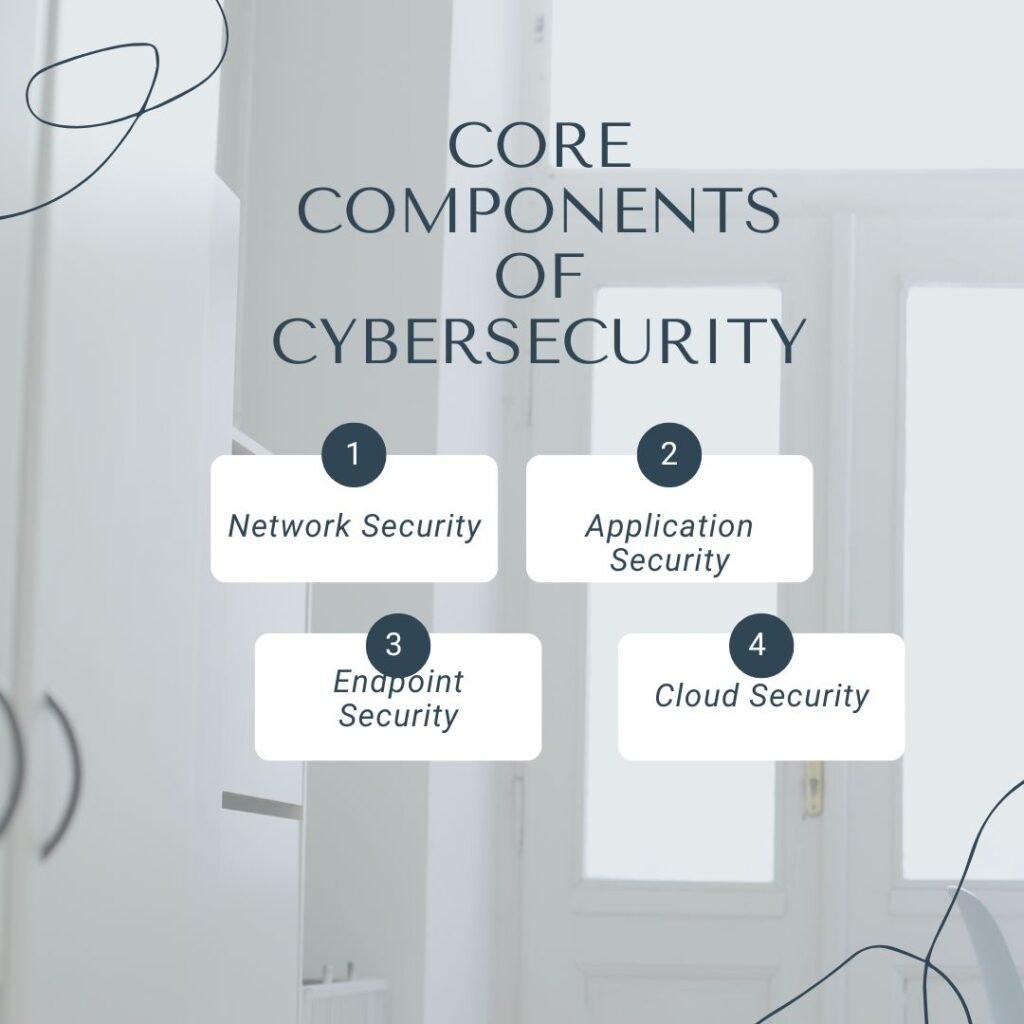
Core Components of Cybersecurity
- Network Security: Guaranteeing that inner systems are secured from dangers, both internal and external.
- Application Security: Ensuring beyond any doubt program and apps are secure from vulnerabilities amid improvement and after deployment.
- Endpoint Security: Securing personal gadgets that interface with the network.
- Cloud Security: Defending information, apps, and administrations facilitated in cloud environments. Identity and Get to Administration (IAM) – Controlling who can get to what data, and confirming their personality some time recently giving access.
What Is Information Privacy?
Data security, frequently alluded to as data protection, is concerned with the legitimate dealing with, preparing, capacity, and utilization of individual information. It includes guaranteeing that people have control over how their individual data is collected and shared. In easier terms, whereas cybersecurity centres on ensuring information from outside dangers, information security centres on overseeing how information is collected, utilised, and shared — particularly individual or sensitive information.
Key Standards of Information Privacy
- Consent: People ought to have the choice to assent to the collection and utilize of their individual data.
- Transparency: Organisations must be clear about why they collect information and how they utilise it.
- Purpose Confinement: Information ought to as it were be utilised only for the reason it was collected.
- Data Minimisation: Collect only the information essential for a particular purpose.
- Accountability: Organisations must take responsibility for information dealing with and comply with security regulations.
The Interconnection Between Cybersecurity and Information Privacy:
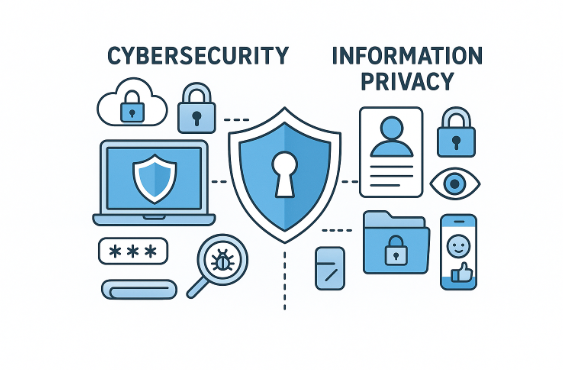
Cybersecurity gives the tools and procedures to ensure information from breaches, whereas information protection guarantees that this information is properly collected and lawfully used.
For example, a company may have vigorous cybersecurity measures, but if it offers individual client information without assent, it still abuses protection laws. Alternatively, a firm with strong security arrangements but frail cybersecurity may inadvertently uncover client information to hackers.
Thus, both viewpoints must work together to genuinely secure people and organisations in the digital realm.
Rising Dangers in the Computerised World:
The computerised scene is advancing quickly, but so are the dangers. Here are a few of the most common and perilous cybersecurity and protection dangers today.
Ransomware:
This malware locks clients out of their claim frameworks or scrambles their records until a payment is made, frequently in cryptocurrencies.
Information Breaches:
Unauthorised access to delicate data—like credit card data or restorative records—can result in enormous financial and reputational damage.
IoT Vulnerabilities:
The developing number of Web of Things (IoT) gadgets like smart TVs, cameras, and wearables includes more entry points for attackers.
Insider Threats:
Not all dangers come from the exterior. Representatives or insiders with a pernicious aim or need for mindfulness can incidentally spill or abuse data.
Social Engineering:
Manipulating individuals into breaking standard security measures can be more viable than specialised hacking.
Legal System and Information Security Laws:
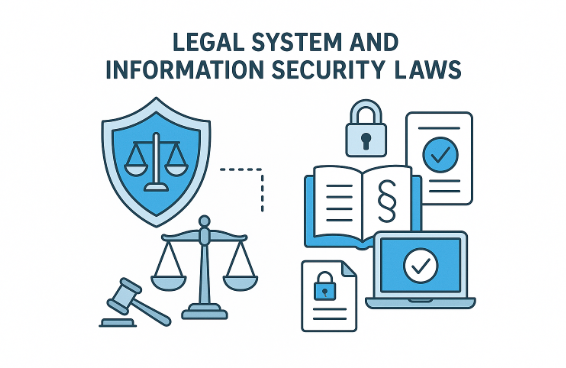
Several worldwide directions point to ensuring individual information and holding organisations responsible for breaches or abuse. A few of the most noticeable include:
Common Information Security Direction (GDPR) – European Union:
It awards people more noteworthy control over their individual information and imposes significant penalties for non-compliance.
California Shopper Security Act (CCPA) – Joined together States:
This law enables California inhabitants to know what individual information businesses collect about them and ask for its erasure or anticipate its sale.
Individual Information Security Charge – India:
India is drafting a charge comparable to GDPR to control information handled by public and private entities. These directions indicate that governments are taking information protection seriously, and businesses must adjust their operations accordingly.
Best Hones for Improving Cybersecurity and Information Privacy:
Whether you’re a person or a huge undertaking, taking proactive steps is basic. Here are a few key practices:
For Individuals:
- Use solid and interesting passwords for distinctive accounts. Avoid open Wi-Fi when dealing with delicate assignments like online banking.
- Be cautious of suspicious links and spontaneous emails.
For Businesses:
- Conduct customary reviews and infiltration testing.
- Educate workers through normal cybersecurity training.
Rising patterns:
Biometric Security: Utilising fingerprints, facial recognition, or retina filters to improve authentication.
The challenge will be adjusting development with cybersecurity and data privacy, particularly in areas like facial recognition, personalised advertising, and big data analytics.
Conclusion:
Cybersecurity and data privacy are not fair specialised issues; they are essential human rights and basic commerce obligations. In an associated world, each person and organisation has a part to play in shielding information.
From utilising solid passwords to actualising enterprise-level firewalls, each activity tallies. As we proceed to grasp advanced life, the call for watchfulness, obligation, and moral information hones gets to be louder than ever.
Frequently Asked Questions
What is cybersecurity?
Cybersecurity is the process of securing computers, servers, systems, and information from unauthorized get to, assaults, and harm. It employs apparatuses like firewalls, antivirus programs, encryption, and multi-factor verification to guard against cybercriminals and guarantee the secure use of computerised systems.
What is information privacy?
Cybersecurity and data privacy are the obligations of overseeing and shielding individual data so that it is collected, stored, and shared in a legal and moral way. It guarantees people have control over their personal information and know how it’s being utilised by organisations.
How are cybersecurity and information security connected?
Cybersecurity ensures the specialised side—keeping programmers and malevolent programs absent from sensitive data—while information protection administers the rules and moral measures for collecting and utilising that information.
How can people ensure their online data?
People can ensure their information by making solid, special passwords for each account, enabling two-factor verification, instantly introducing security upgrades, dodging open Wi-Fi for delicate exchanges, and being cautious about clicking obscure joins or downloading suspicious files.
Why ought businesses care about information protection laws?
Data security laws not only protect clients but also offer assistance to businesses to keep up to date. Failing to comply with these laws can result in budgetary punishments, legitimate consequences, and genuine harm to a company’s notoriety, which can be harder to recover from than financial loss.